ActiveWorldwide
Moda Samskritam
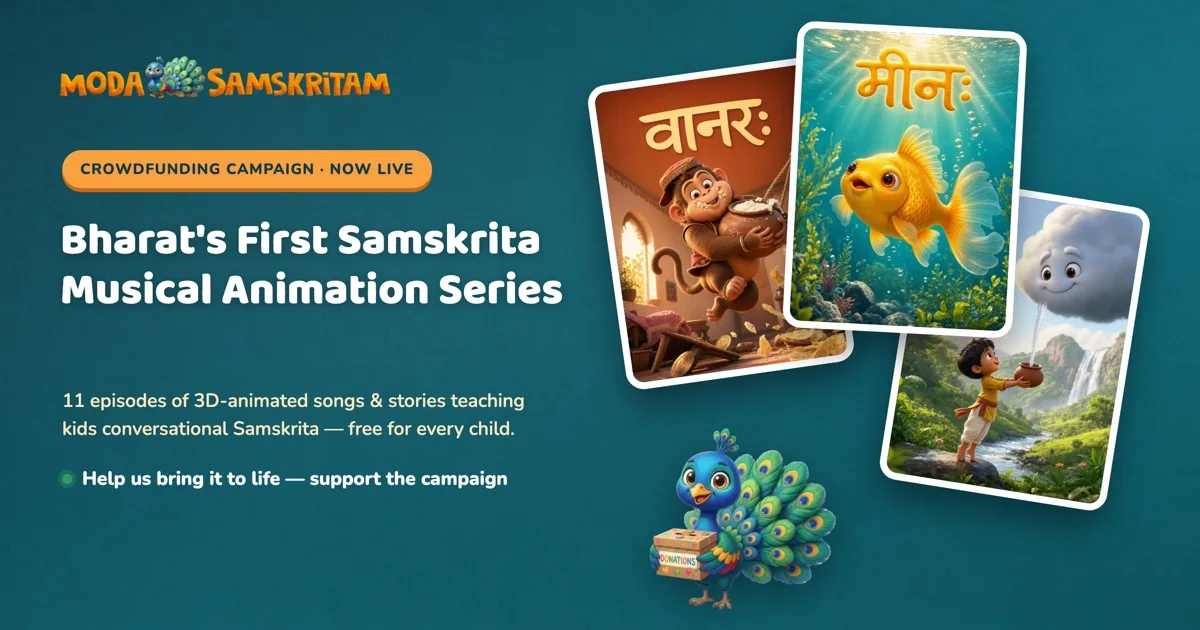
Bharat's first Samskrita musical animation series — the life's work of Dr. Varsha Sarda, led by Samskrita Bharati Canada, and free for every child in the world.
Read moreAn education initiative
Not as a subject to be examined, but as a way of seeing. Folksutra carries the culture of this land — its stories, its arts, its languages, its habits of thought — into the everyday life of children.
Our mission
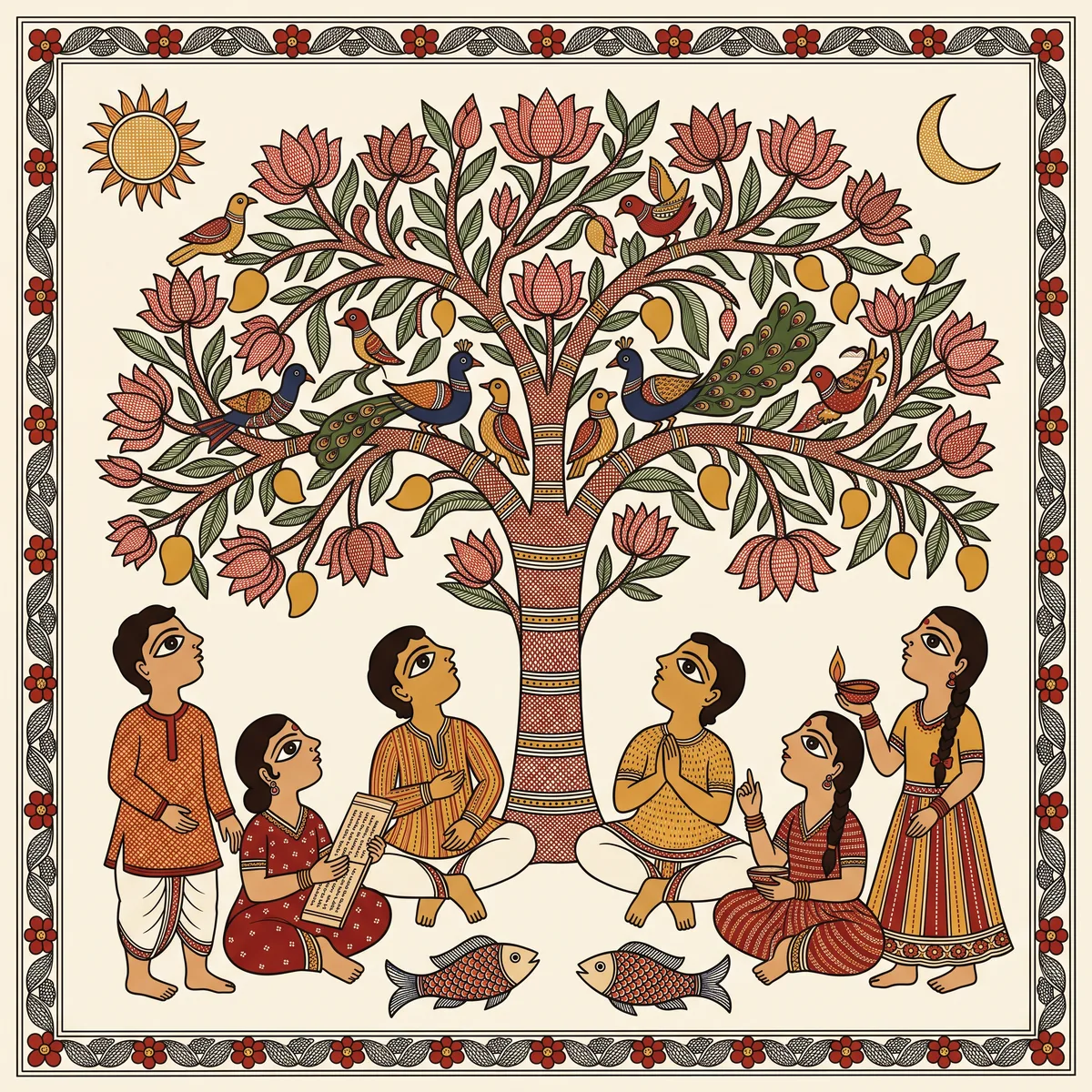
Every culture survives the same way — someone tells a child a story, and the child tells it again. That chain has thinned. Children in India today can name a dozen superheroes and not one figure from the Panchatantra; they can spot a brand logo at fifty paces and not read the painting on their own grandmother's wall.
Folksutra exists to repair that link. We build curriculum, train teachers, and put working folk artists in front of children — so that Bharatiya culture reaches them not as heritage under glass, but as something living, theirs, and worth carrying forward.
Four strands
Four strands, taught together. Each one is a way into the same thing — a child who is at home in their own culture.

The Panchatantra, the Jataka tales, the epics, and the local legends that never got written down. Told aloud, acted out, argued over — the way they were always meant to travel.

Madhubani, Warli, Gond, Pattachitra, Kalamkari. Children learn to make them, and in making them learn what the forms mean, who keeps them, and why they nearly disappeared.

Sanskrit as a doorway, and the mother tongue as a home. We teach children to read the script on the temple wall and the songs their grandparents sing.

Festivals, seasons, food, greeting, service. The daily grammar of a culture — learned by doing it together, not by reading about it.
“A child who knows where they come from walks differently in the world.”
Projects
Four programmes, each one a different way into the same work.
Bharat's first Samskrita musical animation series — the life's work of Dr. Varsha Sarda, led by Samskrita Bharati Canada, and free for every child in the world.
Read more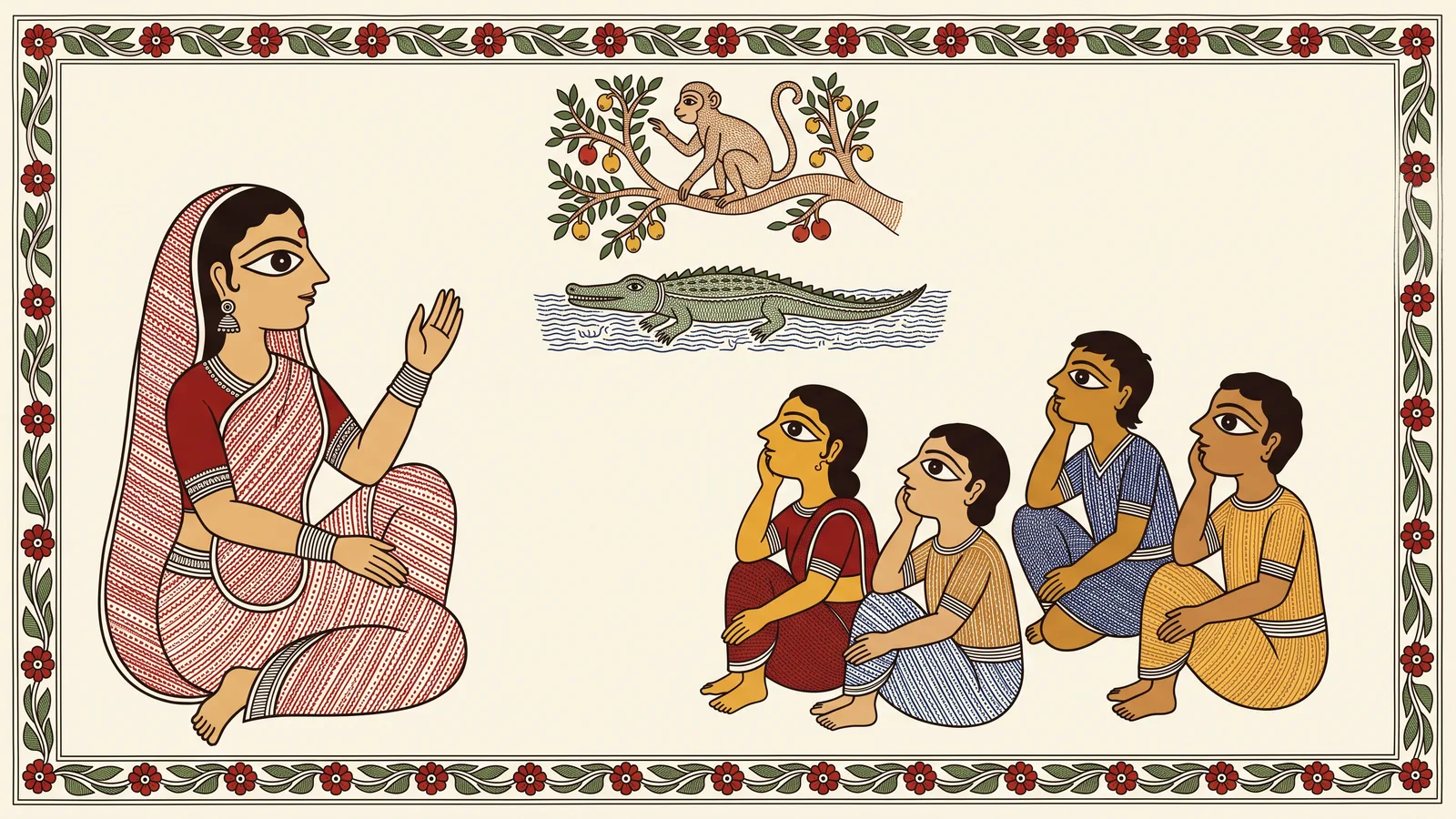
The story programme — Panchatantra, Jataka and local legend, told aloud in the classroom.
Read more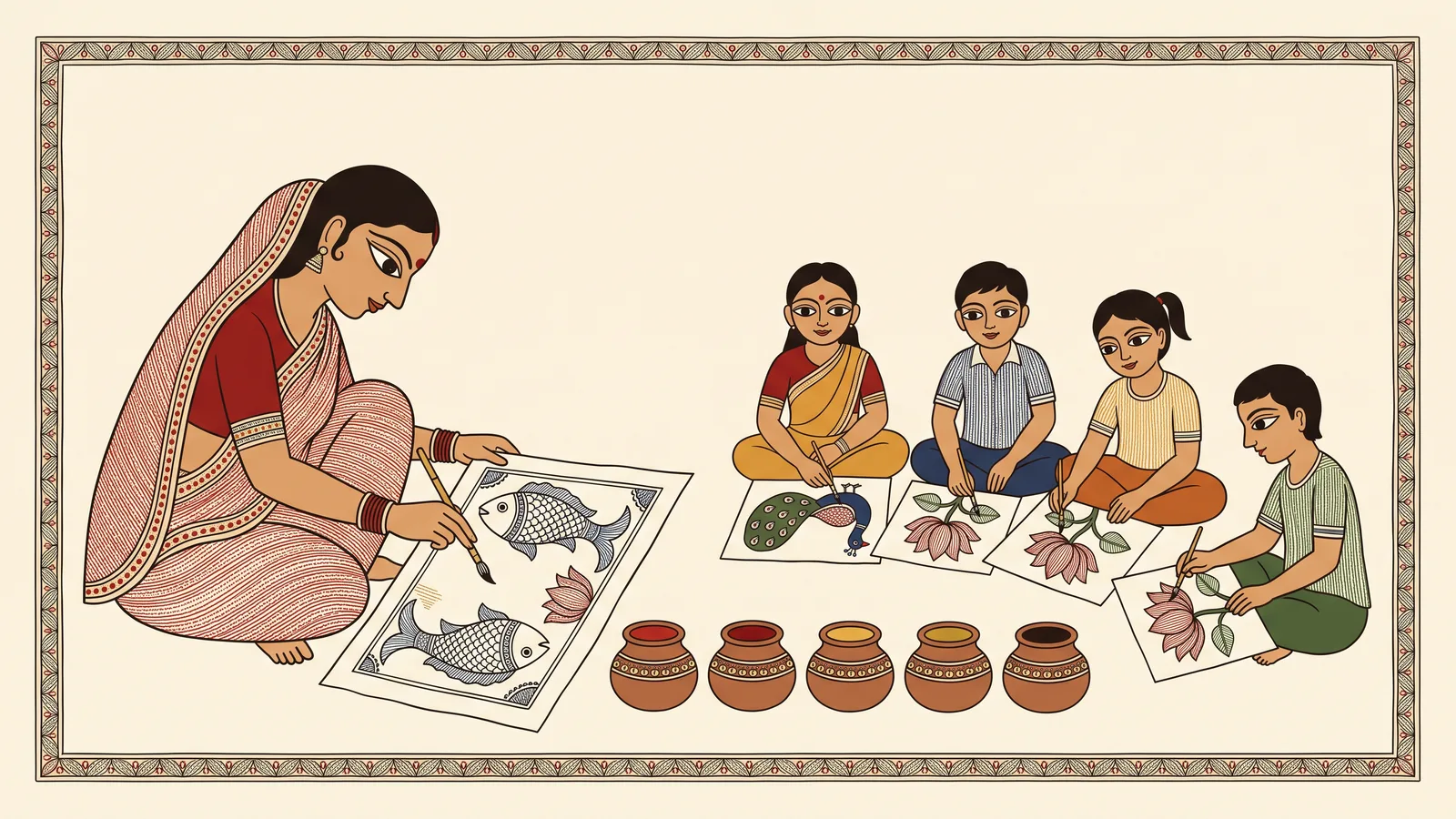
Folk artists teaching their own form in classrooms — Madhubani, Warli, Gond, Pattachitra, Kalamkari.
Read moreFrom the journal
Field notes, arguments, and the occasional write-up of something that did not work.
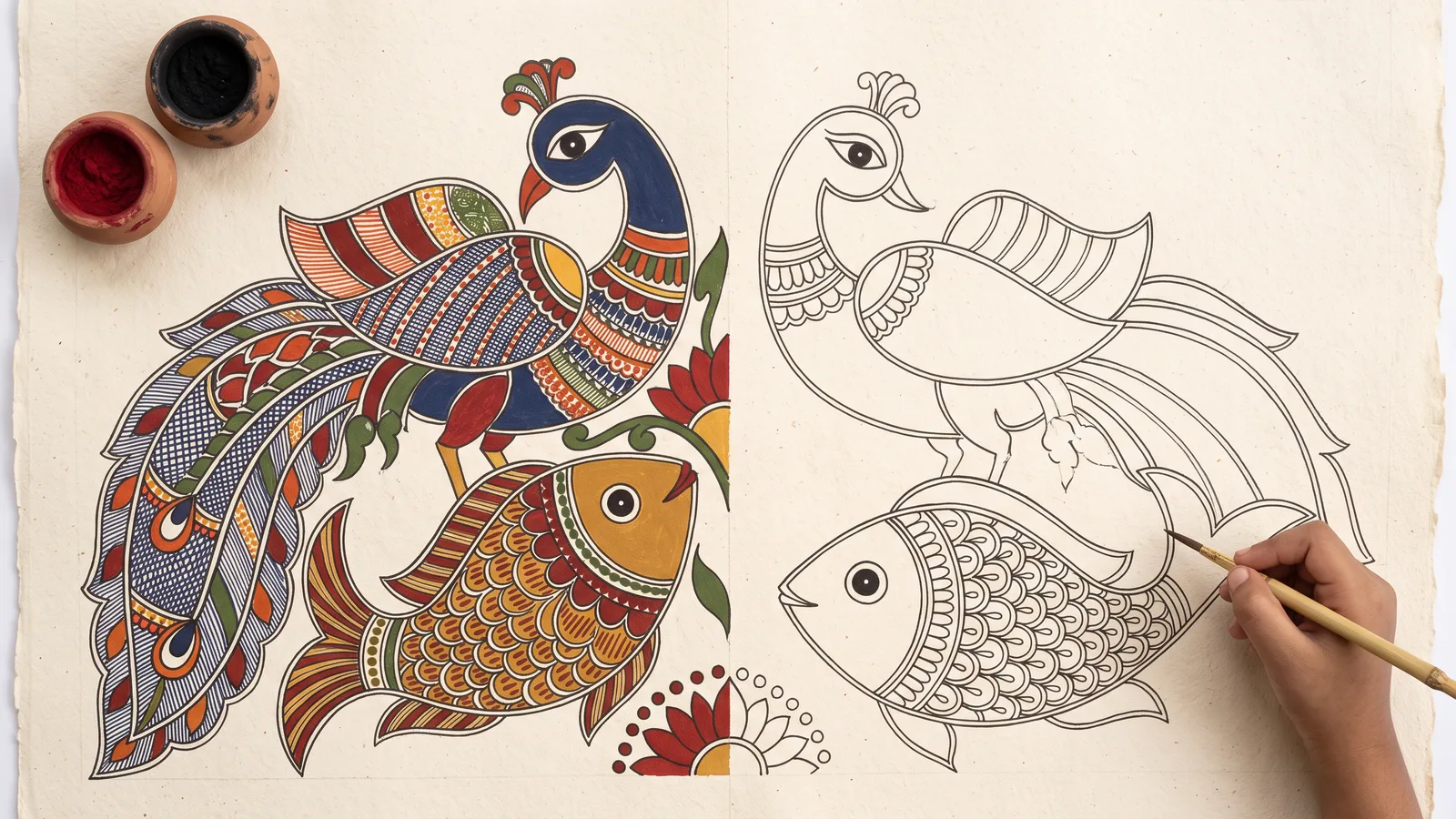
A ten-year-old in Madhubani thought Mithila painting was Japanese. That answer is not her fault, and it tells us exactly what schooling taught her to value.
Read the post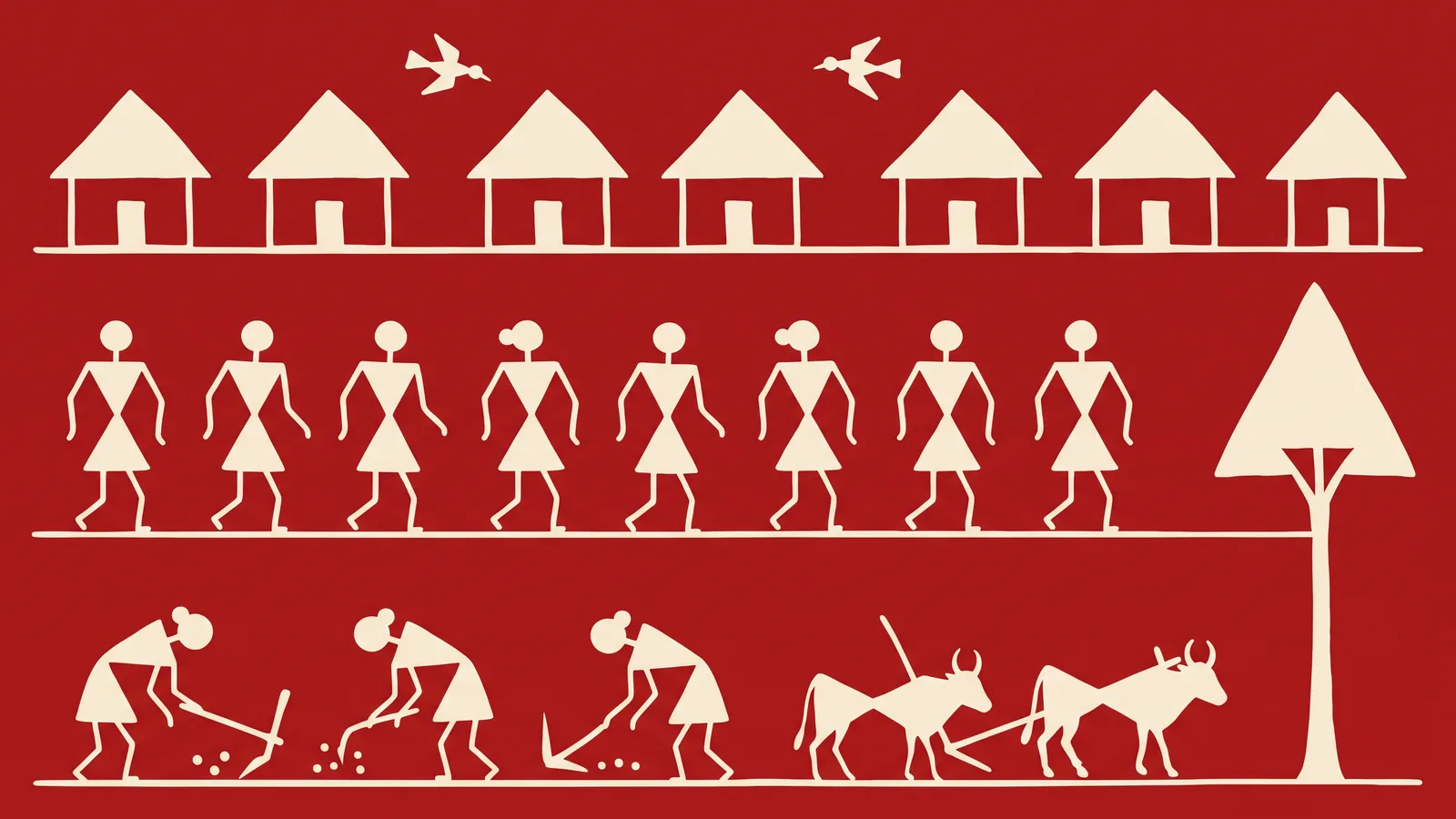
We promised to publish the failures alongside the wins. Here are four things that did not work, and what we changed.
Read the postEvery classroom we reach is funded by someone who thought a child ought to grow up knowing this. Curriculum, teacher training, an artist's fee for a week in a village school — it all adds up from ordinary gifts. Folksutra Trust is a registered charitable trust under the Indian Trusts Act, 1882, and every donation is eligible for tax exemption under Section 80G.